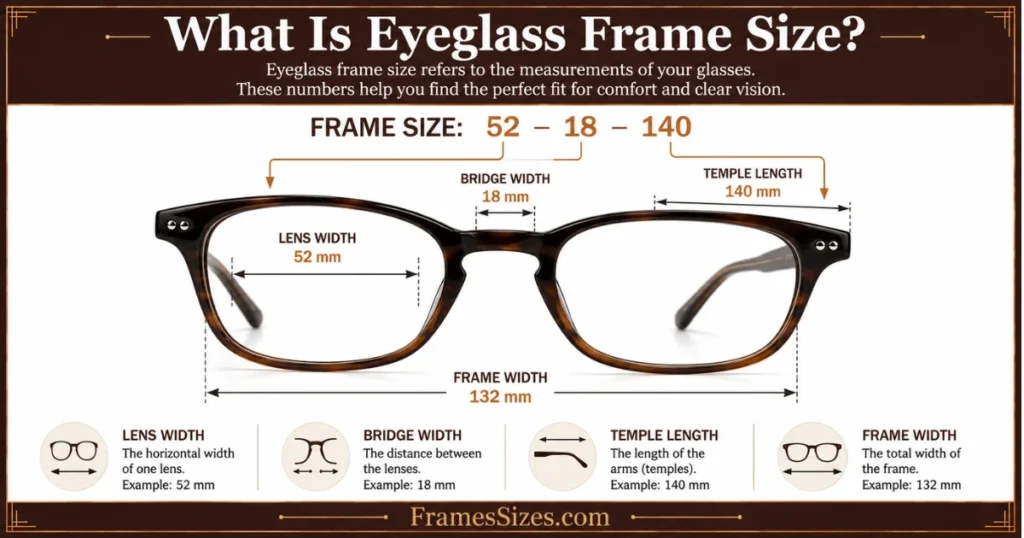
Eyeglass frame size is a three-number measurement (such as 52-18-140) that shows the lens width, bridge width, and temple length in millimeters.
Choosing the correct size helps your glasses sit comfortably, improves lens alignment, and prevents slipping or pressure on your nose and ears.
What Is Eyeglass Frame Size? Understanding the Numbers
Learn what eyeglass frame size means and understand the 52-18-140 glasses size by identifying lens width, bridge width, temple length, and frame width.
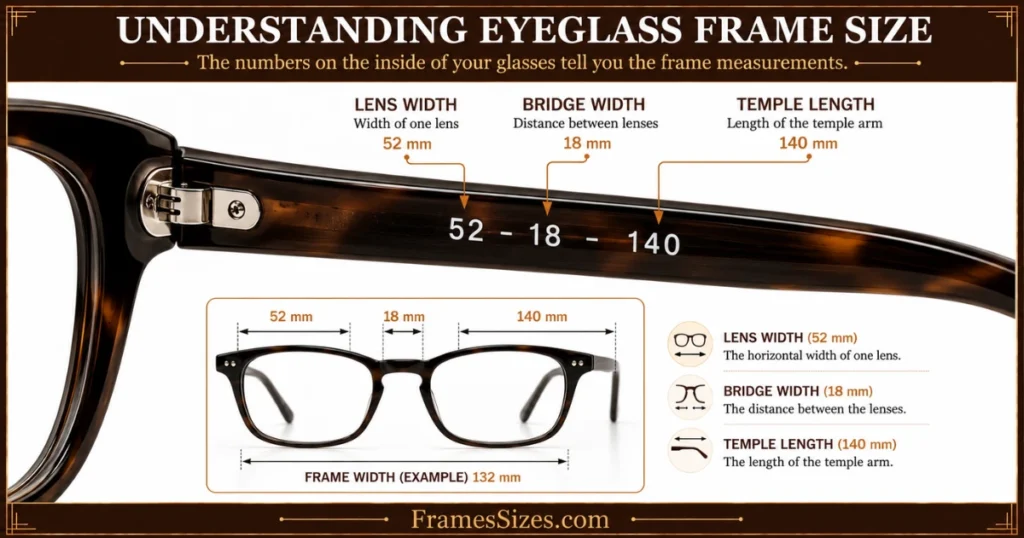
Eyeglass frame size is usually printed inside the temple arm as three numbers, such as 52-18-140. These numbers show your frame’s exact measurements.
They represent lens width, bridge width, and temple length, which determine how comfortably the glasses fit and how well the lenses align with your eyes.
Lens Width (Eye Size) Explained
Lens width, also called eye size, is the horizontal width of one lens at its widest point. It’s the first number in the sequence.
Most frames range from 40mm to 60mm in lens width. A narrower face usually looks better in something closer to 48mm, while wider faces often need 54mm or more for balanced proportions.
Bridge Width Explained
Bridge width is the second number, and it’s the small stretch of frame that rests directly on your nose. Typical bridge sizes run from 14mm to 24mm.
Get this number wrong and your glasses either pinch your nose or slide down within minutes — even if the lens width is perfect.
Temple Length Explained
Temple length is the third number. It measures the arm of the frame, from the hinge all the way to the tip that curls behind your ear.
Common lengths sit between 120mm and 150mm. Too short, and the frame presses at your ears. Too long, and the glasses feel loose and shift when you move.
Learn how to read the 52-18-140 eyeglass frame size printed inside the temple arm and understand lens width, bridge width, and temple length.
Check the inside of the left temple arm of your glasses to find the frame size, usually printed as small numbers like 52-18-140.
If it’s not there, look near the bridge or nose pads. Most branded and prescription glasses include these measurements.
How to Read Eyeglass Frame Size Numbers
If your glasses are marked 52-18-140, here’s what each number means:
52 mm = Lens Width
18 mm = Bridge Width
140 mm = Temple Length
These measurements are always shown in millimeters and help you find replacement frames with a similar fit.
Why Eyeglass Frame Size Matters
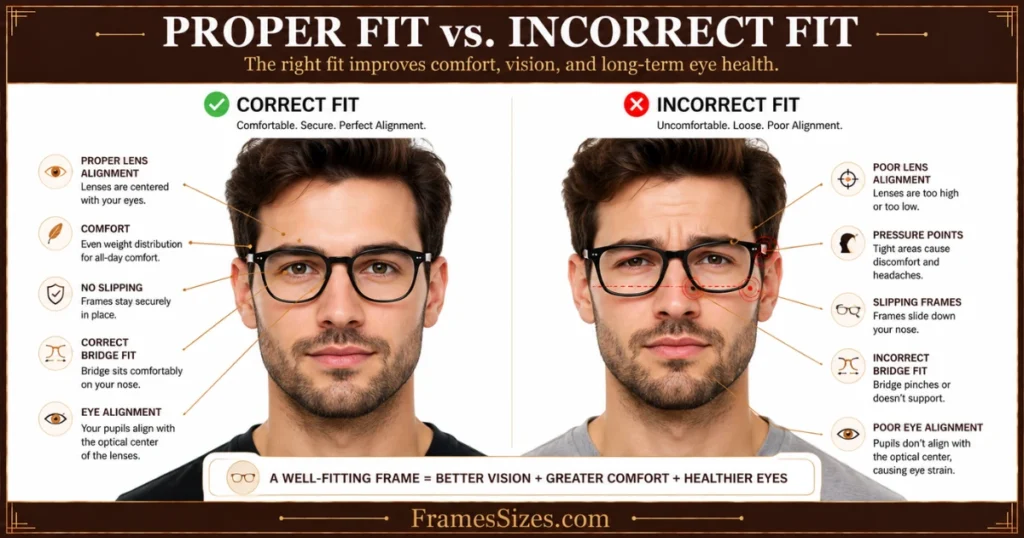
Eyeglass frame fit guide comparing proper and incorrect glasses fit, including lens alignment, bridge fit, comfort, slipping, pressure points, and eye alignment.
Frame size is just as important as style. The right size keeps your lenses centered, improves comfort, and prevents slipping or pressure during daily wear.
It also helps your prescription lenses work correctly. Even a few millimeters can make a noticeable difference, especially with progressive or bifocal glasses.
Eyeglass Frame Size Chart: Small, Medium & Large
Compare Extra Small to Extra Large eyeglass frames with lens width, bridge width, and temple length measurements.
Not every brand labels sizes the same way, so here’s a simple eyeglass frame size chart based on lens width, the number most shoppers rely on first.
Small frames run 50mm or narrower in lens width. These suit narrower faces and petite features.
Bridge width on small frames often falls between 14mm and 17mm, paired with shorter temples around 130mm to 138mm.
Medium Frame Size Range
Medium frames sit between 51mm and 54mm. This is the most common range sold in the U.S., built for average face widths.
Bridge width typically lands around 17mm to 19mm.
Large Frame Size Range
Large frames start at 55mm and go up from there, sometimes reaching 62mm for oversized styles. These are built for wider faces and often come with wider bridges (20mm+) and longer temples (145mm to 150mm).
Frame Size Chart for Men, Women, and Kids
Frame size isn’t really split by gender — it’s split by face measurements. That said, shopping filters often group sizes this way for convenience:
Kids’ frames usually range from 38mm to 46mm in lens width, with shorter temples around 115mm to 125mm.
Women’s frames commonly fall in the 48mm to 54mm range, though this varies widely by style.
Men’s frames often run from 52mm to 58mm, though plenty of men wear smaller sizes comfortably.
The label on the box matters far less than your actual measurements. A “men’s” frame that matches your face will always fit better than a “women’s” frame that doesn’t, and vice versa.
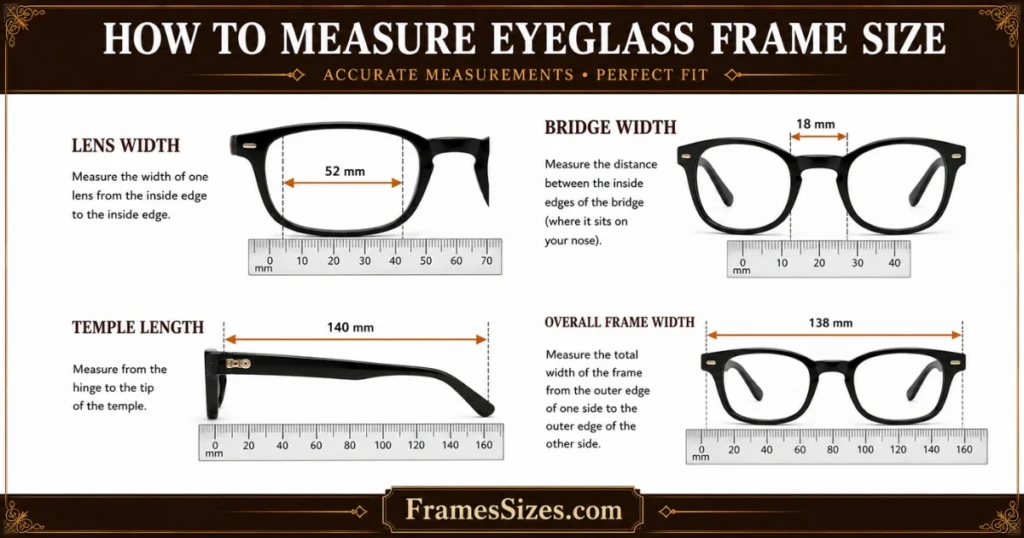
Learn how to measure lens width, bridge width, temple length, and overall frame width of eyeglasses using a ruler.
You can easily measure your eyeglass frame size at home. Check the size printed inside your current glasses, use a ruler or PD ruler to estimate your frame width, or visit an optician for the most accurate measurement—especially if you wear progressive or bifocal lenses.
How to Choose the Right Frame Size for Your Face
Find the best eyeglass frame styles and recommended frame widths for five common face shapes.
Getting the numbers right is only half the job. The other half is matching those numbers to your actual face shape and width.
Best Frame Size by Face Shape
Choose your eyeglass frame size based on your face shape. Round faces suit angular frames, square faces look best with round or oval frames, heart-shaped faces benefit from bottom-heavy styles, and oval faces can comfortably wear almost any frame size or shape.
Best Frame Size by Face Width
A simple rule: your frame width should roughly match your face width, with the temples running nearly straight to your ears without flaring outward.
If you can fit more than one finger between your temple and your face, the frame is likely too wide.
Signs Your Frames Are Too Big or Too Small
Frames that are too big slide down your nose, sit too low, or extend visibly past the sides of your face. Frames that are too small pinch behind the ears, leave red marks on your nose bridge, or make your eyes look cramped toward the center of the lens. Either extreme also throws off your optical center, which can cause mild eye strain over time.
To measure eyeglass frame size, check the lens width, bridge width, and temple length in millimeters, or measure these three parts with a ruler if the numbers are missing.
How Do You Read Eyeglass Frame Size?
To read eyeglass frame size, look inside the temple arm for three numbers, such as 52-18-140, which represent the lens width, bridge width, and temple length in millimeters.
How Do You Measure Eyeglass Frame Size?
You measure eyeglass frame size by measuring the lens width, bridge width, and temple arm length. These three measurements determine how your glasses fit.
How to Read Eyeglass Frame Size
Eyeglass frame size is shown as three numbers printed inside the frame, for example 52-18-140. The numbers indicate the lens, bridge, and temple measurements in millimeters.
How to Choose Eyeglass Frame Size
Choose an eyeglass frame size that matches your face width and your current glasses for the most comfortable fit. A properly sized frame keeps your lenses centered and prevents slipping or pressure.
Where can I find my eyeglass frame size numbers?
Check the inside of the left temple arm. The size is usually stamped there in small print. If it’s missing, look near the nose bridge or nose pads instead.
What do the three numbers on my glasses mean?
They show lens width, bridge width, and temple length, in that order, measured in millimeters. A typical example looks like 52-18-140.
What is a normal eyeglass frame size?
Most adults fall between 50mm and 56mm in lens width, 16mm and 20mm in bridge width, and 135mm to 145mm in temple length. Your ideal size still depends on your individual face measurements.
How do I know if my eyeglass frame size is too big?
Your glasses are likely too big if they slide down often, sit lower than expected, or stick out past the edges of your face. A frame that’s noticeably wider than your face is usually the culprit.
Can small changes in frame size really matter?
Yes. Even a 1mm to 2mm shift in bridge width or lens width can change how a frame feels after a few hours of wear. Small numbers have an outsized effect on comfort.
Does frame size affect my prescription or lens options?
It can. Strong prescriptions may look thicker in wider lenses, and progressive or bifocal lenses need enough lens height to work properly. Your optician can tell you if your prescription calls for a specific size range.
Eyeglass Frame Size Chart
An eyeglass frame size chart helps you compare lens width, bridge width, and temple length to find the best fit. Most adult frames range from 48–58 mm lens width with proportional bridge and temple sizes.
How to Measure Eyeglass Frame Size
To measure eyeglass frame size, measure the lens width, bridge width, and temple arm length in millimeters. These three measurements determine how comfortably your glasses fit.
How Do You Read Eyeglass Frame Size?
To read eyeglass frame size, look inside the temple arm for numbers like 52-18-140. They represent the lens width, bridge width, and temple length in millimeters.
How Do You Measure Eyeglass Frame Size?
You measure eyeglass frame size by checking the lens, bridge, and temple dimensions with a ruler or using the numbers printed inside your current frame.
How to Read Eyeglass Frame Size
Eyeglass frame size is printed as three numbers, such as 52-18-140, showing the lens width, bridge width, and temple length. Understanding these numbers makes it easier to choose the right-fitting glasses.
Hi, I’m Adrian Blackwell, the author at FramesSizes.com. I help simplify measurements, dimensions, and frame sizes with easy guides and clear explanations — so you can understand sizes quickly and accurately.