TV frame sizes range from 43 to 98 inches, with popular options including 50″, 55″, 65″, 75″, and 85″. This guide explains the actual width and height of each screen size and how bezel width can change the TV’s total footprint.
Wondering what TV frame size is right for your room? Learn how to choose based on viewing distance, bedroom or living room space, wall layout, and bezel style before mounting your frame TV.
TV Frame Sizes Chart: 43 Inches to 98 Inches
Compare 43-inch to 98-inch TV frame sizes with clear width, height, and diagonal measurements.
Samsung’s 2026 lineup offers The Frame in 43″, 50″, 55″, 65″, 75″, 85″, and a new 98″ “Super Big Art TV” size. The Frame Pro, the higher-end version, is available in 55″, 65″, 75″, and 85″ sizes.
Diagonal Size
Width
Height
43″
~37.5″
~21.1″
50″
~43.6″
~24.5″
55″
~47.9″
~27.0″
65″
~56.7″
~31.9″
75″
~65.4″
~36.8″
85″
~74.1″
~41.7″
98″
~85.4″
~48.1″
Why does this matter more for a frame TV? Because a frame TV hangs flush on the wall like art, the exact width and height decide how it balances with your furniture below it — not just the diagonal number on the box.
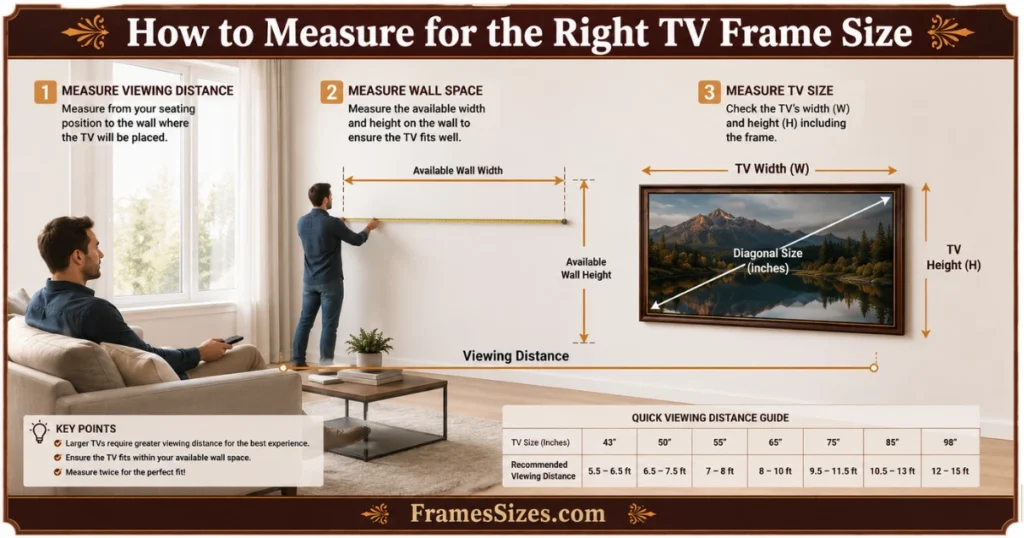
Learn how viewing distance, wall space, TV width, and height determine the right frame TV size.
Most buying guides tell you to “measure your wall.” That’s not specific enough. Here’s the actual method.
What’s the formula for the right TV size based on viewing distance? Viewing distance equals screen width divided by two times the tangent of half the viewing angle. In plain terms: the farther you sit, the bigger the screen can be without straining your eyes.
You don’t need to do that math yourself. Two industry standards make it simple:
THX recommends measuring the distance from your couch to the TV wall in inches, then multiplying by 0.835 to get your ideal screen size.
SMPTE recommends a minimum 30-degree viewing angle, while THX recommends 36 to 40 degrees for a more cinematic feel.
Compare viewing distance and recommended TV screen sizes using SMPTE and THX viewing angles.
Quick example: at an 8-foot viewing distance, the SMPTE standard suggests around a 59-inch TV, while the THX standard suggests closer to 72 inches.
Where should the TV frame sit on the wall? The center of the screen should land at roughly seated eye level — about 42 inches from the floor for a standard sofa, or 38 inches for a recliner. This is also why mounting a frame TV above a fireplace often pushes it too high for comfortable viewing, even though it looks great as “art.”
TV Frame Size by Room: Bedroom, Living Room, and Small Spaces
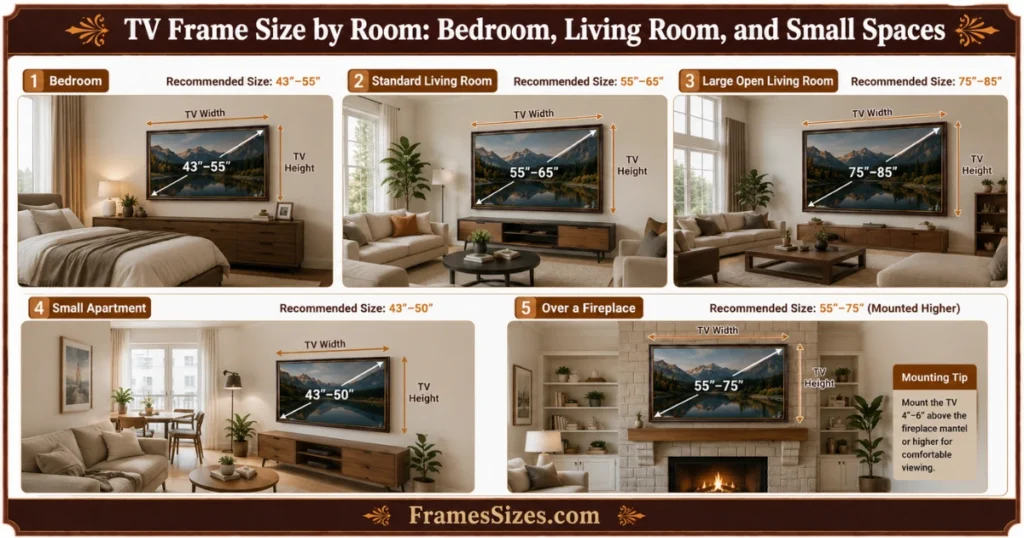
Compare recommended TV frame sizes for bedrooms, living rooms, small apartments, and fireplace installations.
No single size fits every room. Here’s how size should shift by space:
Bedroom: A 43″ to 55″ frame TV usually works best, since viewing distance from a bed is often under 8 feet.
Living room, standard seating: 55″ to 65″ fits most couches placed 8 to 10 feet from the wall.
Living room, open floor plan or large sectional: 75″ to 85″ makes sense once seating stretches past 10 feet.
Over a fireplace: Size up one notch from the room-based recommendation, since fireplace mounting usually pushes the TV higher and farther from eye level than ideal.
Small apartments or accent walls: Sticking to 43″–50″ keeps the frame TV looking like a piece of art rather than an oversized screen crowding a small wall.
Bezel Width and How It Changes Your TV’s Actual Footprint
See how bezel and decorative frame width increase a 65-inch TV’s overall footprint.
This is the part most guides skip entirely, and it matters. The bezel — the frame around the screen — adds real inches to your TV’s footprint on the wall. Skipping this step is the single most common measuring mistake buyers make.
Does the bezel make the TV bigger than its screen size? Yes. Samsung’s stock bezel adds a modest border, but third-party frame brands add more.
Samsung’s stock bezel: roughly 0.5 inches wide, made of plastic, in four color options.
Deco TV Frames’ Premiere Collection: 3″ to 3.75″ wide, mostly solid wood, made for traditional or ornate decor.
That difference matters. A 65-inch frame TV with a Premiere-style wood bezel can add 6 to 7.5 inches of total width once you account for both sides of the frame. If your wall space is tight, or you’re centering the TV between two windows, that extra width can be the difference between a perfect fit and a frame that overlaps the trim.
Samsung’s 2026 lineup tops out at 98 inches for the standard Frame, building on a design-first approach that has made The Frame one of Samsung’s most successful lifestyle products since its 2017 debut.
What is the smallest TV frame size?
43 inches is currently the smallest size Samsung offers for the standard Frame TV.
Does frame size affect price a lot?
Yes. Frame TVs typically run $300 to $600 more than a standard TV of the same size, largely due to the bezel, no-gap mount, and Art Store features.
Can I put a different frame brand on any size TV?
No. Both Samsung’s bezels and third-party options like Deco TV Frames and Frame My TV are built to fit specific screen sizes and are compatible only with Samsung’s Frame model — not standard TVs.
How much bigger does a bezel make the TV?
It depends on the bezel style. Slim aluminum bezels add about 1.5 inches per side, while wood-style ornate bezels can add 3 to 3.75 inches per side.
Conclusion
Picking the right TV frame size comes down to three things: your viewing distance, your room’s layout, and the bezel style you plan to add. Measure first, then choose the size — not the other way around. Get those three details right, and a frame TV will look and feel exactly like the art piece it’s designed to be.
Hi, I’m Adrian Blackwell, the author at FramesSizes.com. I help simplify measurements, dimensions, and frame sizes with easy guides and clear explanations — so you can understand sizes quickly and accurately.