Mountain bike frame size depends on your height, inseam, reach, and riding style. Compare your measurements with a sizing chart to choose the best-fitting frame.
Mountain bike frame size determines how well a bike fits your body and affects comfort, control, and safety. The right size depends on your height, inseam, reach, stack, and riding style—not just the frame label (S, M, L, or XL). This guide breaks down exactly how mountain bike sizing works, how to measure it yourself, and what actually changes your fit beyond your height.
What Is Mountain Bike Frame Size
what-is-mountain-bike-frame-size
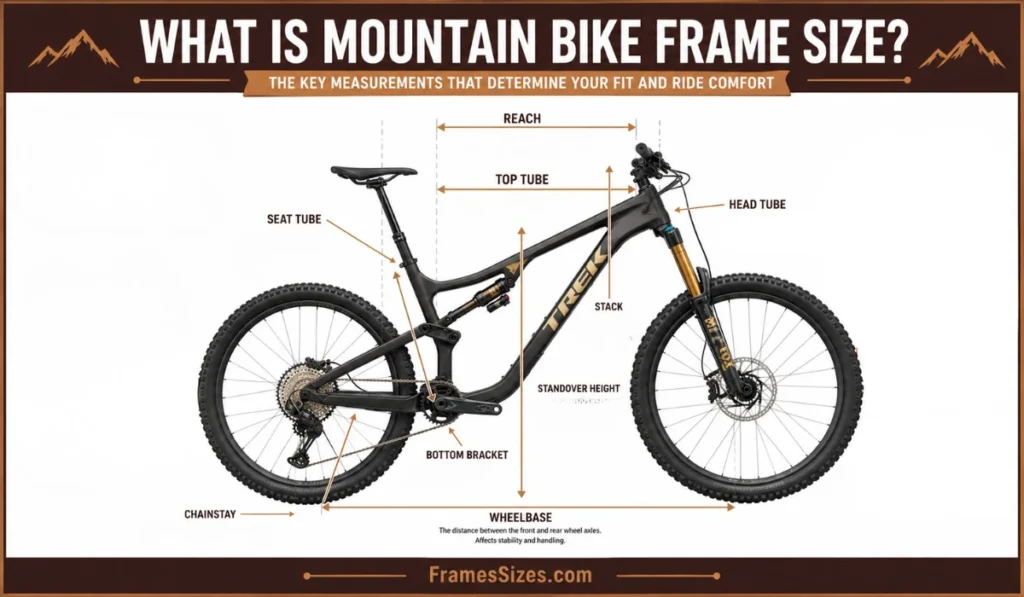
Mountain bike frame size is a measurement of how big or small a bike frame is. It tells you whether a bike will fit your body, and how it will feel when you ride it. Unlike road bikes, mountain bikes are built for rough, uneven, and unpredictable terrain. This changes what “correct” sizing even means.
Mountain Bike vs Road Bike Frame Size
Mountain Bike
Road Bike
Reach matters most
Seat tube matters more
Upright riding
Aggressive riding
Standing often
Sitting mostly
Technical trails
Smooth roads
Why the Right Mountain Bike Frame Size Affects Control, Comfort, and Injury Risk
how-to-measure-mountain-bike-frame-sizes
A correctly sized frame keeps your spine, hips, and shoulders in a natural position. This reduces strain during long rides.
It also affects bike handling. A frame that’s too long or too short changes how quickly you can react to obstacles, which matters a lot on technical trails. Riders on a poorly fitted frame often develop knee pain, lower back pain, or wrist discomfort. These issues usually disappear once the frame size is corrected.
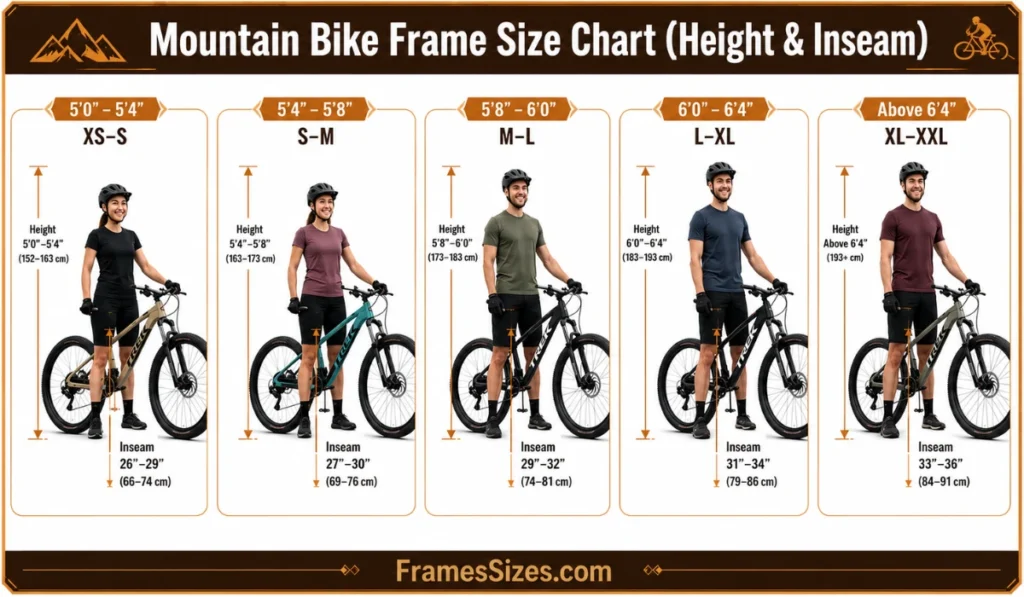
Riders around 5’0″–5’4″ typically fit an extra small or small frame. Riders around 5’4″–5’8″ typically fit a small or medium frame. Riders around 5’8″–6’0″ typically fit a medium or large frame.
Riders around 6’0″–6’4″ typically fit a large or extra large frame. Riders above 6’4″ typically need an XL or XXL frame. These ranges are guidelines, not rules. Inseam length, torso length, and arm length all shift where you land inside these ranges.
Rider Height
Inseam
Frame Size
5’0″–5’4″
27–29 in
XS–S
5’4″–5’8″
29–31 in
S–M
5’8″–6’0″
31–33 in
M–L
6’0″–6’4″
33–35 in
L–XL
Above 6’4″
35+ in
XL–XXL
Frame Size Letters (S/M/L/XL) vs. Numeric Sizing Explained
Many mountain bike brands use letter sizes like S, M, L, and XL. Others use numbers, like a “size 4” or “size 5”. The problem is that a medium from one brand can feel completely different from a medium from another brand. This happens because there’s no single industry standard for mountain bike geometry.
Because of this, comparing reach and stack numbers is far more reliable than comparing size labels alone. For example, a Medium frame from Trek may have a different reach and stack than a Medium from Specialized or Giant. Always compare the geometry chart instead of relying only on the frame label.
Why Reach-Based Sizing (S-Sizing) Is Replacing Height Charts
In recent years, several mountain bike brands have shifted toward reach-based sizing instead of traditional S/M/L labels. This system sizes riders by their preferred reach number rather than height alone.
This shift exists because two riders of the same height often want very different bike lengths, depending on riding style and preference. Reach-based sizing gives riders more control over how stretched out or compact their bike feels.
How to Measure Mountain Bike Frame Size Yourself
how-to-measure-mountain-bike-frame-size
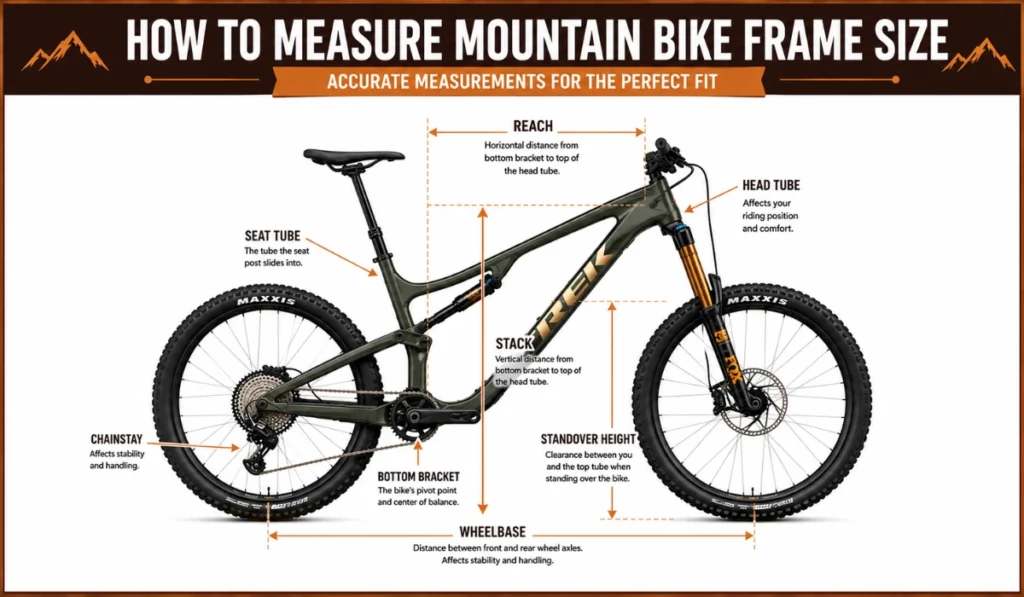
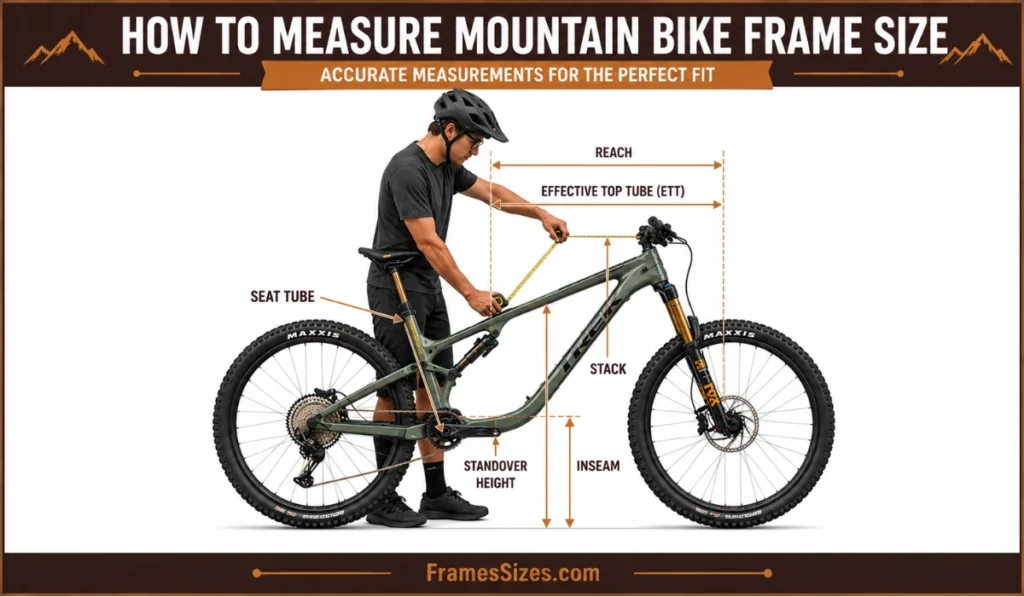
To measure a mountain bike frame size, use a tape measure to check the reach, effective top tube (ETT), standover height, and your inseam on a flat surface. These measurements help determine the correct mountain bike frame size for better comfort, control, and riding performance.
After measuring, compare your numbers with the bike manufacturer’s geometry chart to find the best fit. For the most accurate results, wear your riding shoes while measuring, as they affect standover clearance and overall bike fit.
Key Factors That Affect Mountain Bike Frame Size Beyond Height
reach-vs-stack
Height gets most of the attention, but several other factors shape your ideal mountain bike frame size. Skipping these often leads to a frame that technically “fits” but never feels right.
Reach vs. Stack: How Riding Position Changes Your Ideal Frame Size
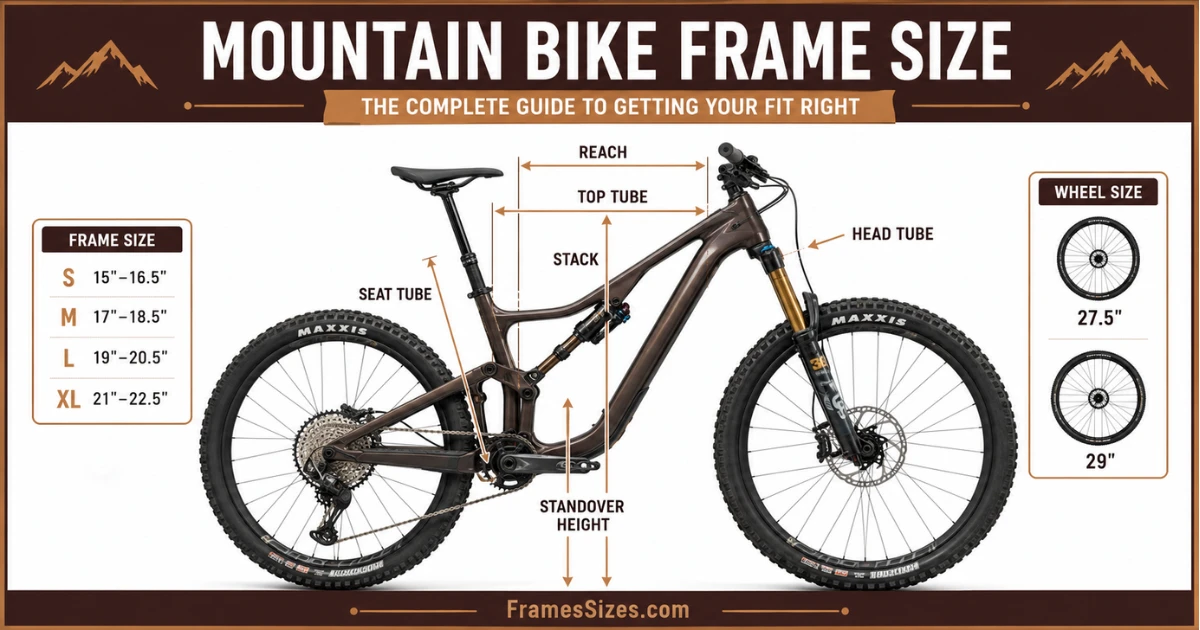
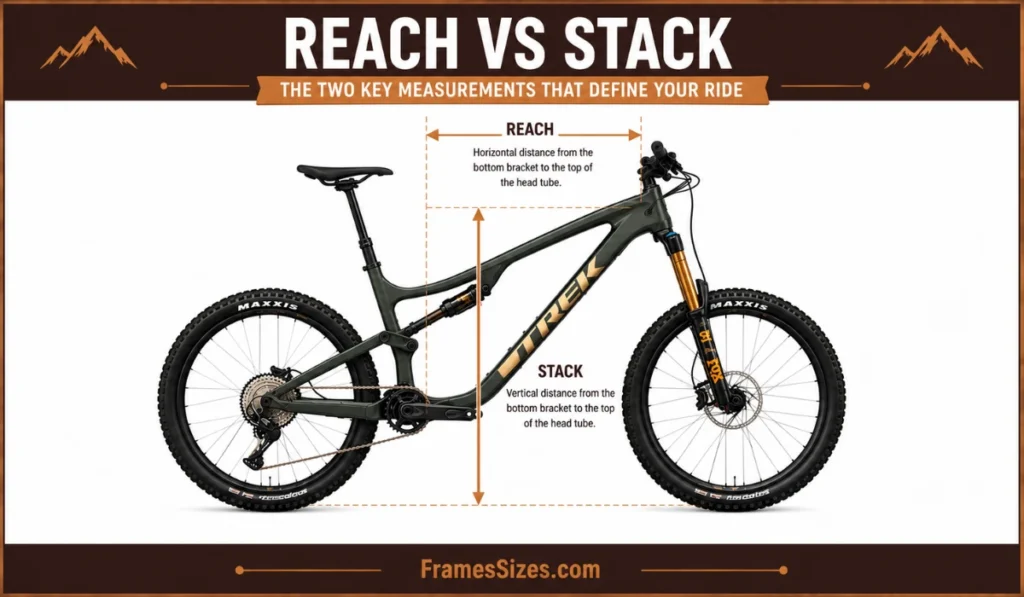
Stack is the vertical height from the bottom bracket to the top of the head tube. A higher stack puts you in a more upright position. A lower stack puts you in a more aggressive, stretched-out position.
Riders who prioritize comfort often look for a higher stack. Riders who prioritize speed and aggressive descending often prefer a lower stack paired with a longer reach.
How Wheel Size (27.5″ vs. 29″) Affects Mountain Bike Frame Size and Standover
Wheel size changes how a frame is built, which changes fit. 29-inch wheels generally raise standover height slightly compared to 27.5-inch wheels on the same frame size.
Shorter riders sometimes find that a 27.5-inch wheel setup gives them better standover clearance and easier low-speed handling.
Dropper Post Insertion Length and Its Effect on Frame Sizing
This is a detail many guides skip entirely. A dropper seatpost needs enough insertion depth inside the seat tube to drop fully.
Shorter riders on tall seat tubes sometimes can’t run a long-travel dropper post, even if the rest of the frame fits. Always check maximum dropper post insertion length before buying, especially if you’re shorter than average.
How Riding Style (XC, Trail, Enduro, DH) Changes the Right Frame Size
Cross-country (XC) riders often prefer a slightly smaller, more compact frame for efficient climbing and quick handling.
Trail and enduro riders tend to favor a longer reach for stability on fast, rough descents.
Downhill (DH) riders often size up even further, since stability at high speed matters more than tight maneuverability.
Mountain Bike Frame Size for Women, Kids, and E-MTBs
Women-specific mountain bikes often feature narrower handlebars and shorter reach, built around proportionally longer legs and narrower shoulders. Many women ride unisex frames comfortably too, so this comes down to personal preference.
Kids’ mountain bikes should never be bought to “grow into.” A properly sized frame helps a young rider build confidence and control from day one.
E-MTBs (electric mountain bikes) carry extra weight from the motor and battery. This shifts the bike’s balance point, so reach and standover clearance deserve extra attention when sizing an e-MTB.
Should You Size Your Mountain Bike Frame Up or Down?
small-vs-large
This is one of the most debated topics in mountain bike sizing. Riders between two sizes often ask whether to size up or down, and the honest answer is: it depends on how you ride.
Benefits of Sizing Up Your Mountain Bike Frame
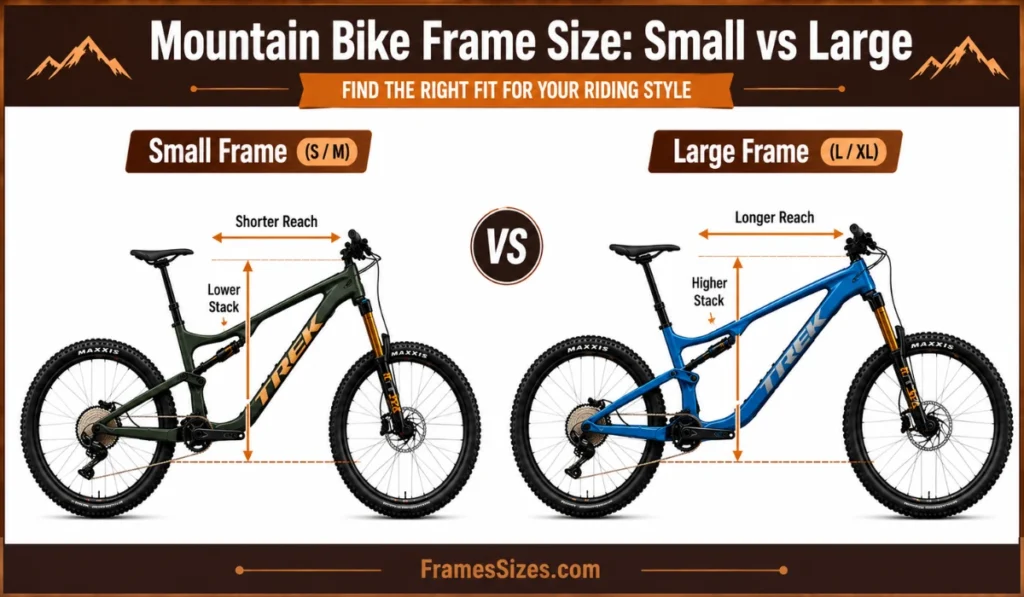
A larger frame with more reach feels more planted at high speed. It handles rough, rocky sections with more stability and confidence.
Riders who spend most of their time at bike parks or racing enduro often benefit from sizing up.
Benefits of Sizing Down Your Mountain Bike Frame
A smaller frame feels more playful and easier to maneuver. It’s quicker in tight corners, easier to manual, and better suited to slow, technical, and unfamiliar trails.
Many riders also find a smaller frame climbs more efficiently, since it puts them in a more compact, powerful pedaling position.
Mountain Bike Frame Size: Small vs. Large Comparison Table
What size mountain bike frame do I need for my height?
Most riders can use a basic height chart as a starting point, but reach, inseam, and riding style all shift the ideal size. Always check a brand’s specific geometry chart rather than relying on height alone.
Is it better to size up or down on a mountain bike?
Size up for stability at speed and rough terrain. Size down for agility, tight trails, and better climbing position. Neither choice is universally “correct.”
How much standover clearance do I need on a mountain bike?
Aim for at least 2 inches of clearance between the tires and the ground while straddling the bike. Aggressive riders often prefer 3 to 5 inches.
Does wheel size affect mountain bike frame size?
Yes. 29-inch wheels typically raise standover height slightly compared to 27.5-inch wheels on the same frame. This matters most for shorter riders.
What is reach in mountain bike sizing?
Reach is the horizontal distance from the center of the bottom bracket to the center of the head tube. It shows how long a bike feels when you’re standing on the pedals.
Can I use the same frame size across different mountain bike brands?
Not reliably. A medium frame from one brand can have a very different reach and stack than a medium from another brand. Always compare actual geometry numbers, not just size labels.
Hi, I’m Adrian Blackwell, the author at FramesSizes.com. I help simplify measurements, dimensions, and frame sizes with easy guides and clear explanations — so you can understand sizes quickly and accurately.